
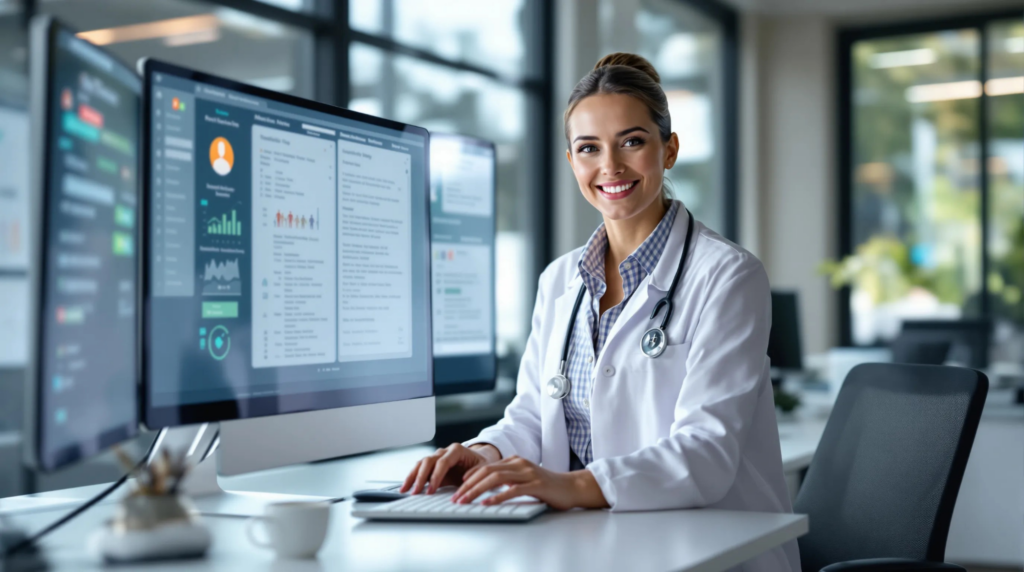
Have you ever wondered how our healthcare professionals seem to have superhuman typing abilities? Spoiler: they don’t. Enter the marvel of medical speech to text software, where your voice transforms into text quicker than you can say “medical transcriptionist.” This technology not only saves time but also enhances accuracy, allowing us to focus on what really matters: patient care. So, buckle up as we navigate this exciting innovation in healthcare.
Understanding Medical Speech To Text Software
Medical speech to text software is a game changer, making it easier for healthcare professionals to document patient information swiftly and accurately. Rather than painstakingly typing notes into a system, doctors and nurses can speak naturally, and the software converts their words into text almost in real-time. This technology utilizes advanced algorithms and machine learning to adapt to the unique dialects and terminologies used in the medical field. For us, this means fewer headaches when it comes to documentation and more time devoted to patient care.
Benefits of Using Speech To Text in Healthcare
We all know time is of the essence in healthcare, and speech to text software is all about efficiency. By reducing the time spent on documentation, our healthcare professionals can dedicate more attention to their patients. The accuracy of these systems minimizes errors that might arise from manual input, making patient records more reliable. Also, this technology can enhance accessibility for those who may struggle with traditional typing, ensuring that every voice is heard. Picture this: a busy physician can now dictate notes while reviewing a patient’s chart. Efficiency at its finest.
Key Features to Look For
When diving into the world of medical speech to text software, we must focus on several essential features to ensure we pick the best option. First, we need to look for high accuracy rates, nobody wants to miscommunicate something critical due to a software glitch. Next, real-time transcription capability is crucial: anything less could cost us precious time. Another important factor is compatibility with existing health record systems. Integration should be seamless. Finally, let’s not forget user-friendly interfaces. If it’s cumbersome to use, even the best software will get pushed to the side.
Top Medical Speech To Text Software Solutions
As we explore the best options on the market, a few stand out for their comprehensive features and user satisfaction. Dragon Medical One is an industry favorite, renowned for its high accuracy and robust vocabulary tailored specifically for healthcare. Another impressive contender is M*Modal, which offers powerful analytics and integrates well with electronic health records. Finally, Microsoft Azure Speech to Text works wonders as part of a broader digital transformation strategy in healthcare. Each of these solutions brings something unique to the table, so we must choose based on our specific needs.
Challenges and Considerations
While the advantages of medical speech to text software are impressive, challenges do exist. First and foremost, we need to train the software properly, poorly trained systems can lead to frustrating inaccuracies. Medical professionals must also adjust to speaking at a conversational pace: if we mumble or speak too quickly, transcription quality may suffer. Also, data security is paramount. Since we’re dealing with sensitive patient records, our chosen software must comply with HIPAA regulations to safeguard this information. We can’t underestimate the importance of patient privacy.
Future Trends in Medical Speech Recognition
Looking ahead, the landscape of medical speech recognition is bursting with potential. Innovations are on the horizon, including AI-enhanced systems that continuously learn from user interactions, improving accuracy and efficiency over time. We may also see greater integration with telehealth platforms as remote care becomes increasingly popular. Another exciting development is the incorporation of multi-language support, allowing our diverse patient population to communicate seamlessly. With these trends, the future looks brighter than ever for healthcare communication.
More Stories
Incredible Software Solutions Shaping Our Digital Future
How Strategic Planning Software Transforms IT Project Outcomes
Essential Features to Look for in Photo Editing Software for Beginners